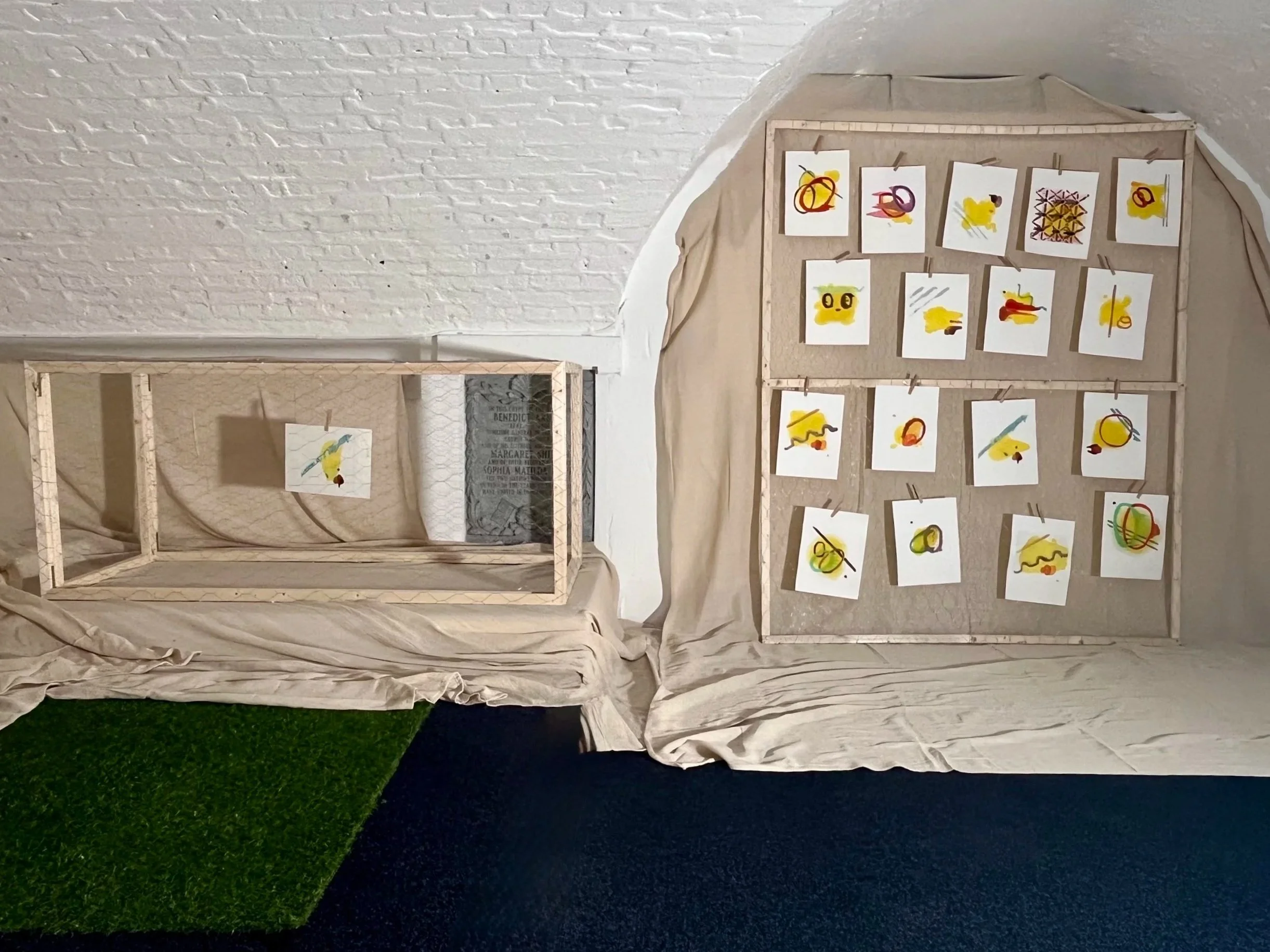
REFUGE at the Crypt: installation as critique
Staged directly within the crypt of St Mary's Church, Battersea in August 2025, the two-person exhibition REFUGE at the Crypt served as a live environment to test my spatial and material critique. The installation placed the saturated, cheerful aesthetics of the YOLKO monotypes in direct tension with harsh physical materials. This physicalised the dissonance between sanitised consumer branding and the realities of confinement.
the coop and the crypt
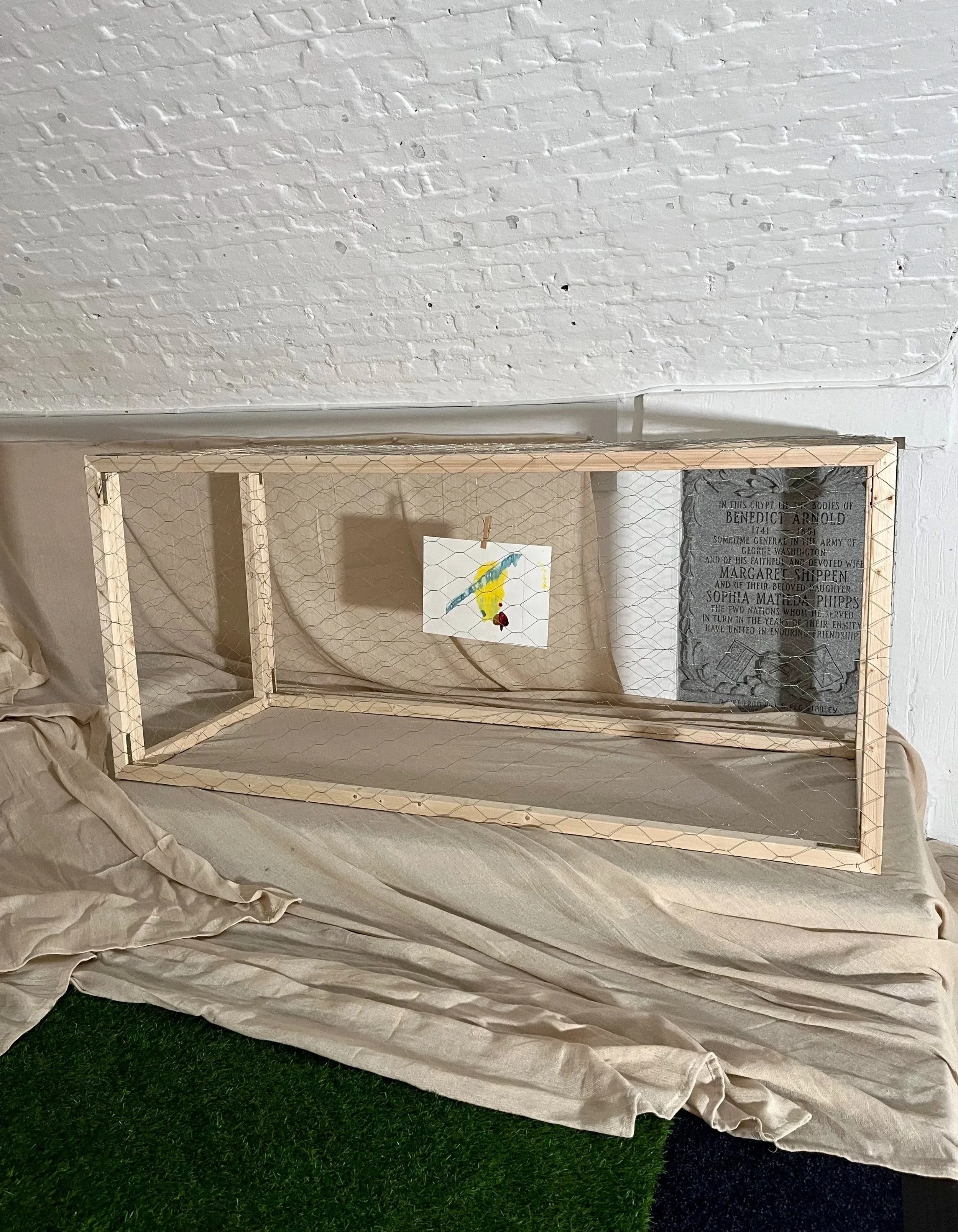
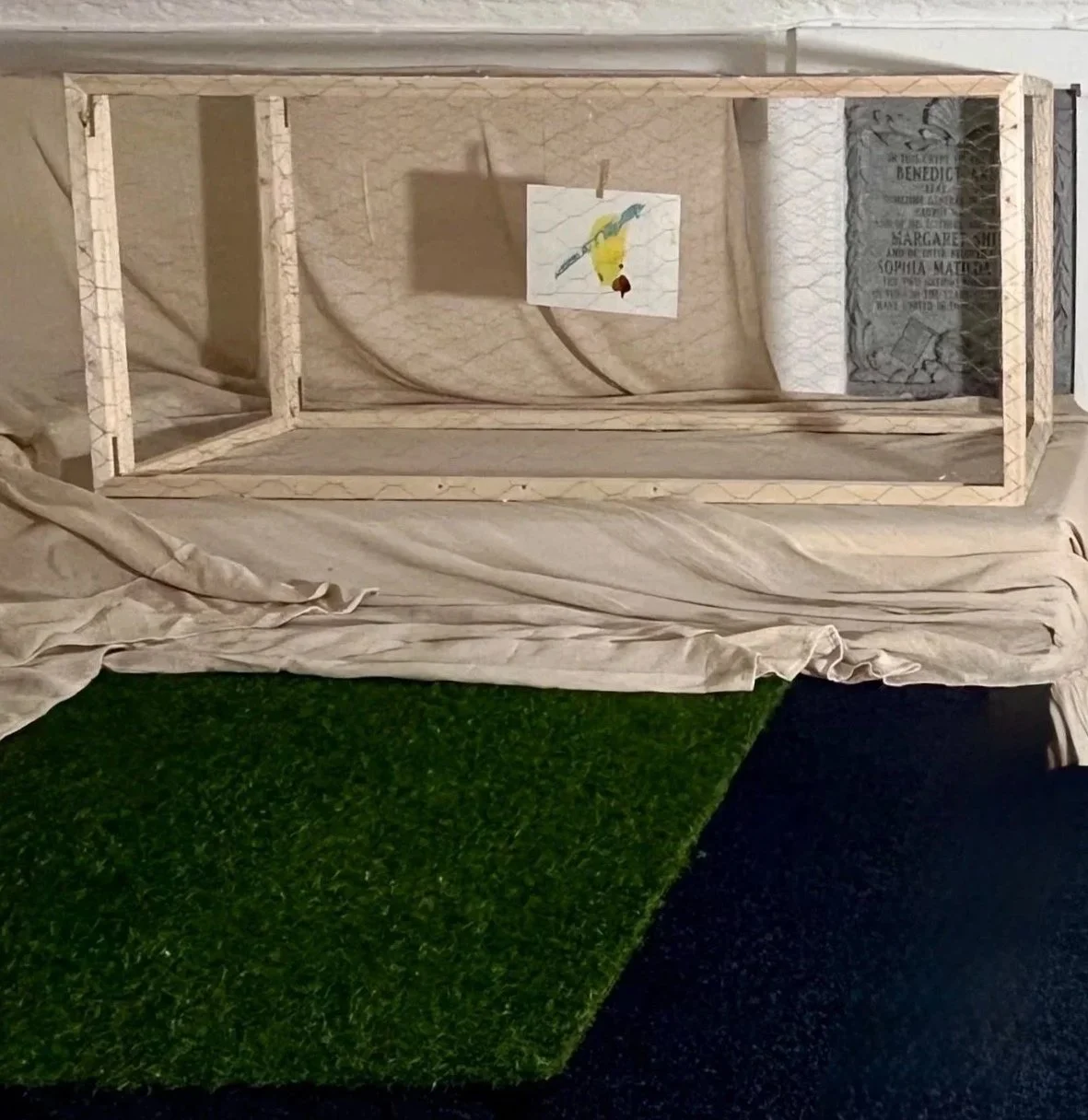
A life-sized wire and wood chicken coop was constructed directly over an existing tomb, famously the burial site of Benedict Arnold. Anchoring the structure over a historical grave situated the work within an architecture of mortality, physically linking themes of containment and finality.
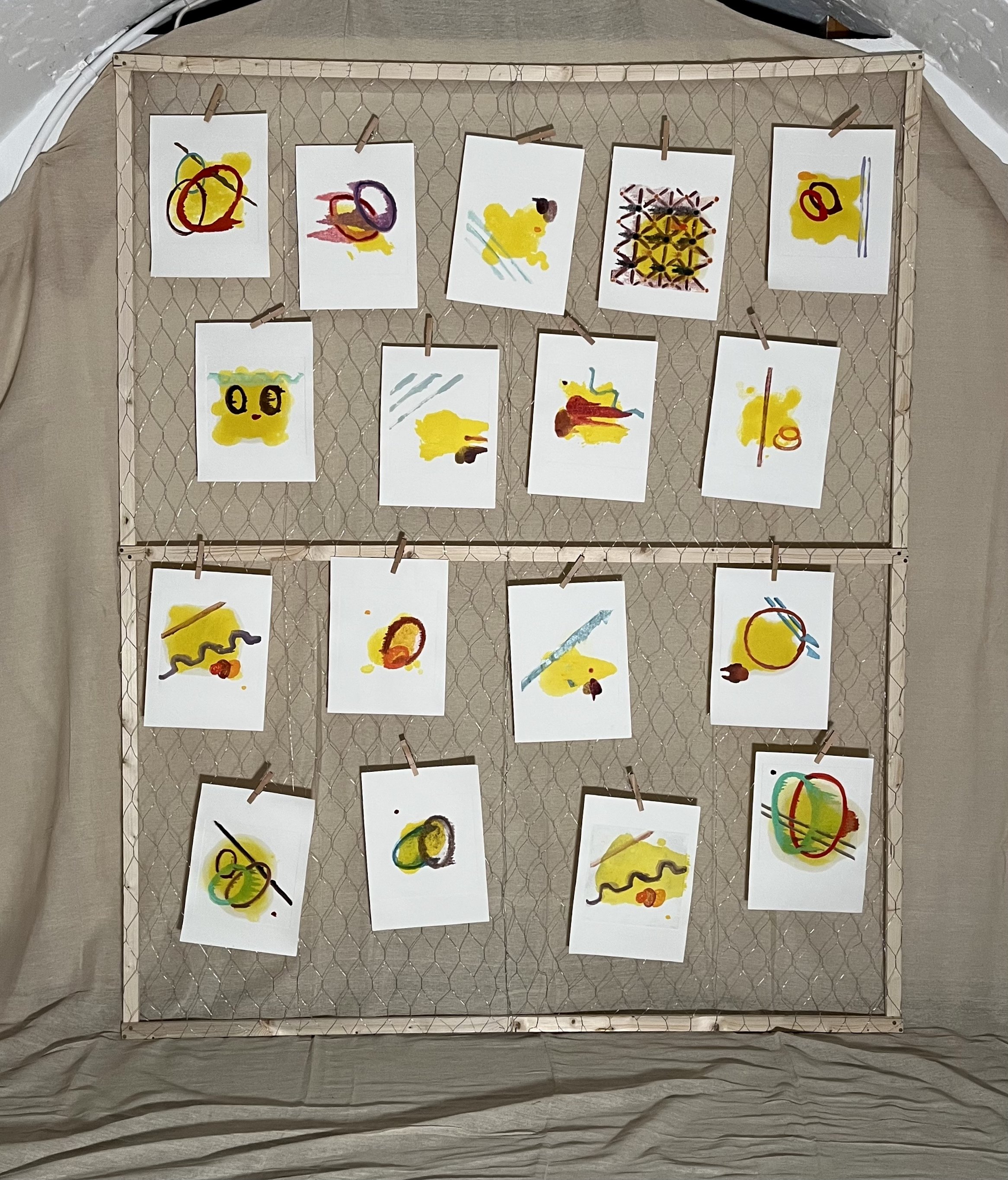
The unframed YOLKO monotypes were suspended directly onto this raw wire mesh using wooden clothes pegs. This specific method of display framed the prints within a visual language of restriction, providing a physical context that counteracted the cheerful imagery while referencing traditional roles in domestic labour. Shifting the critique from the two-dimensional surface into the physical environment created a direct encounter between the viewer and the architecture of confinement.
decoding the referent: the AstroTurf
A central component of the installation was a precise one-square-metre cut of AstroTurf. This artificial surface physically represents the legal minimum outdoor space allocated for a free-range chicken. This physical metric becomes even more stark when contrasted against the legal allowance of housing nine birds per square metre inside the barn. By materialising this specific spatial unit, the intervention actively decodes the comforting language of consumer advertising. It contrasts the synthetic nature of the material with the organic associations of the consumer label, exposing the strict, bureaucratic measurements that govern animal agriculture.
expanding the emblems
Surrounding the central coop structure, concurrent canvas and linen works were displayed against heavily draped fabric. This curatorial choice further disrupted the conventions of a pristine gallery wall, anchoring the emblematic paintings deeply within the historical architecture of the crypt.
Operating as an open work, the installation invited active viewer interpretation. The physical space allowed audiences to project broader socio-political concerns onto the work, from reading the draped fabric as shrouds to viewing the coop as a metaphor for wider systemic confinement. This confirmed the capacity of these open emblems to hold multiple associations at once.
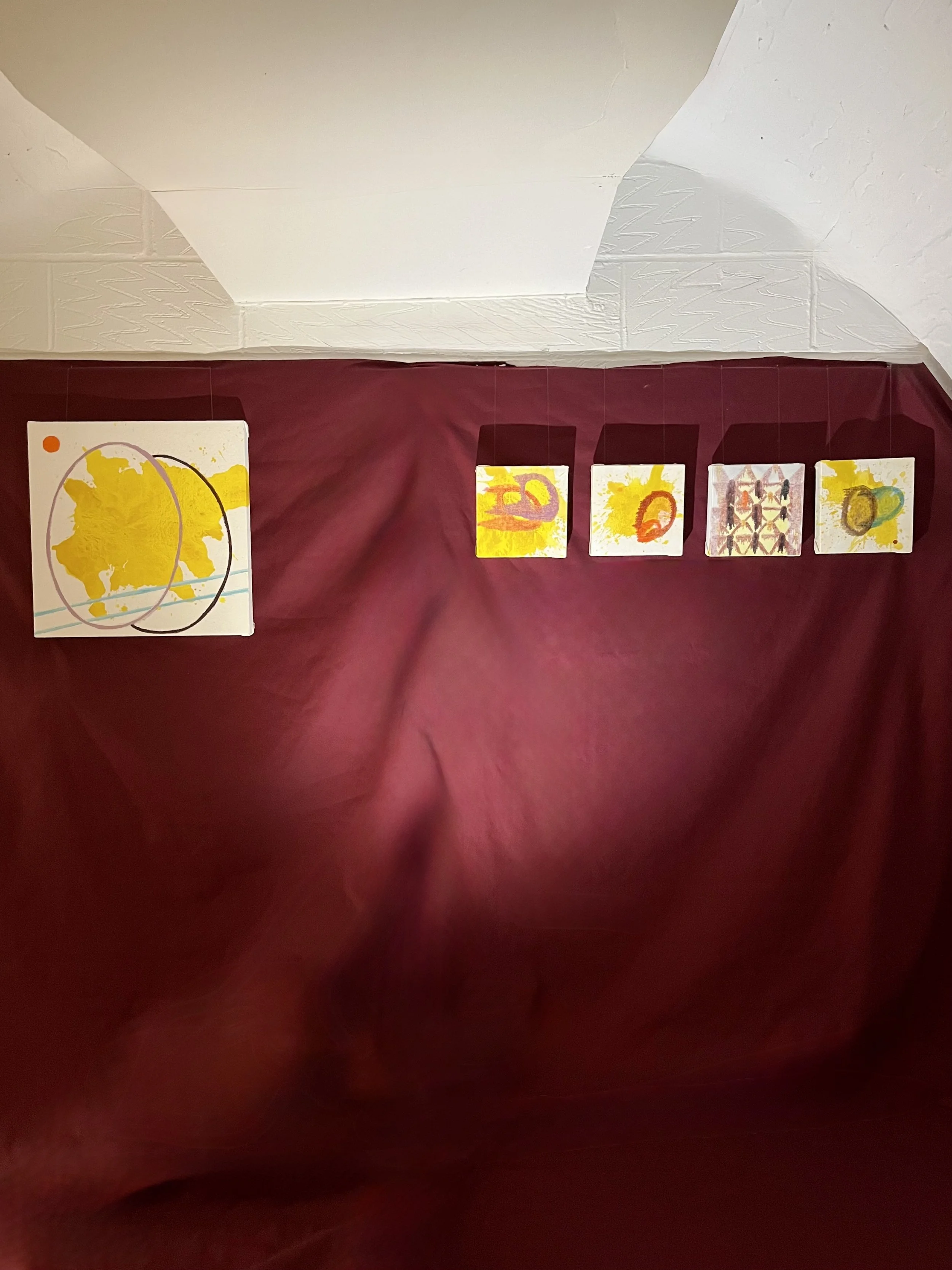
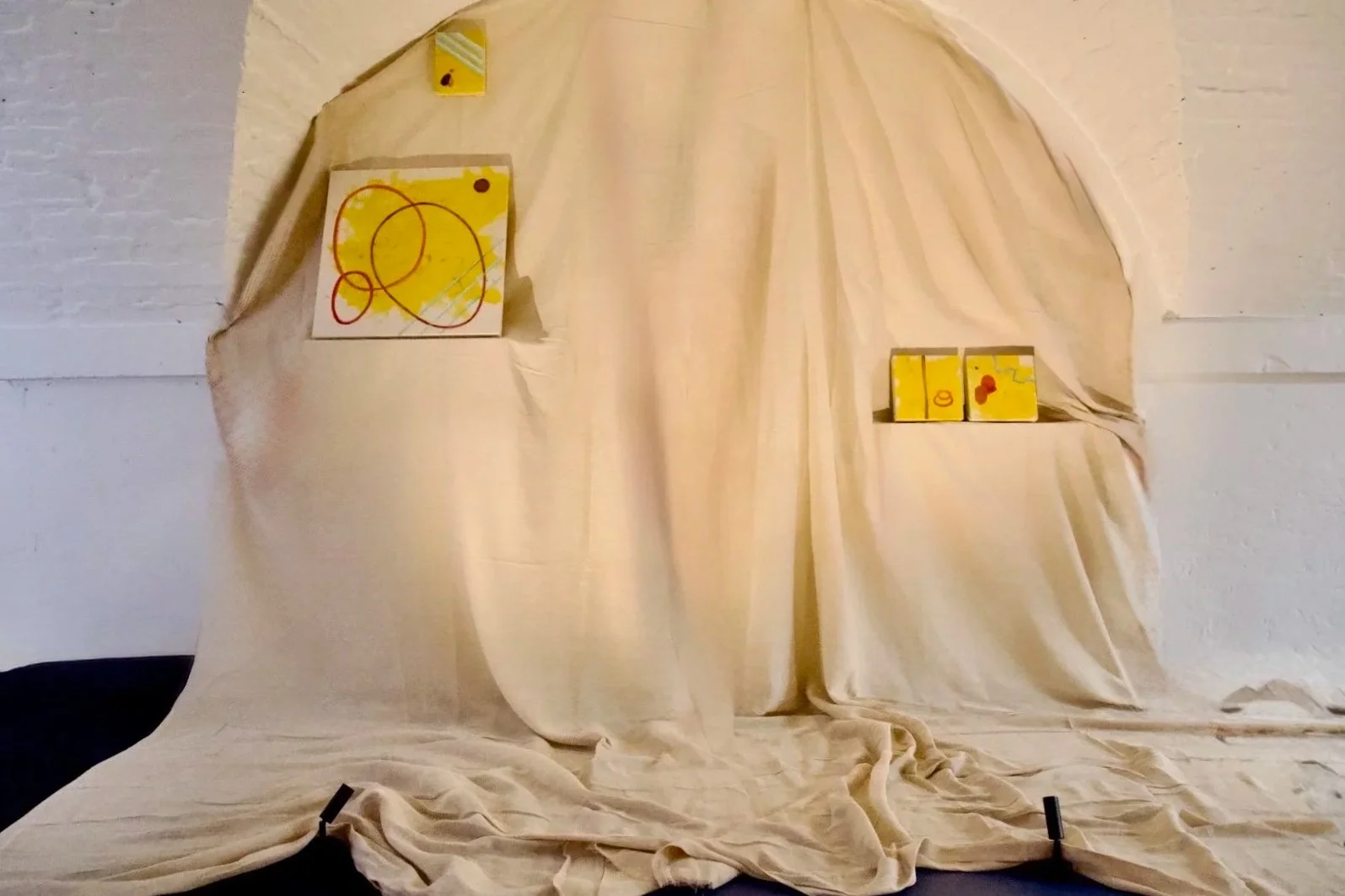
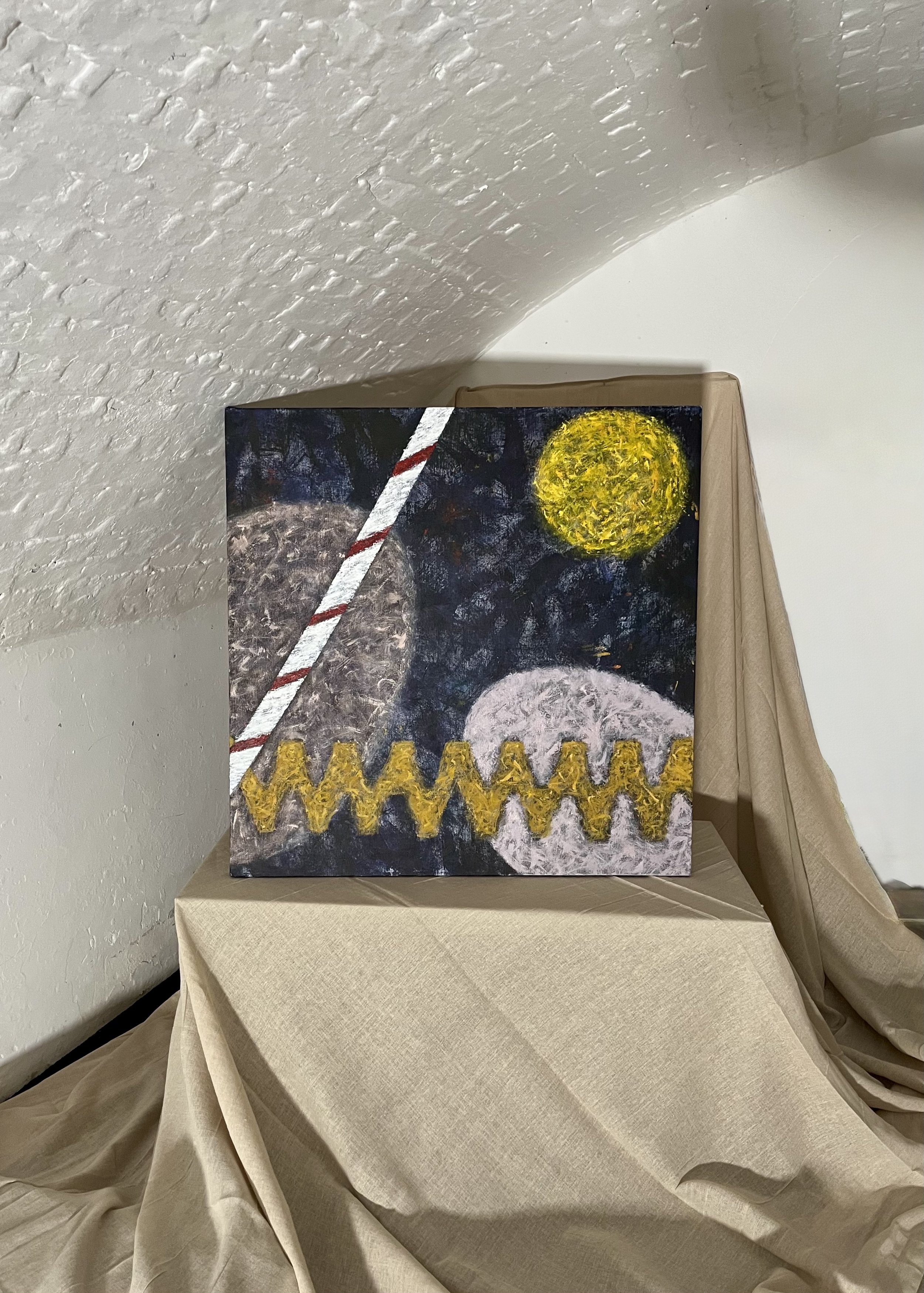
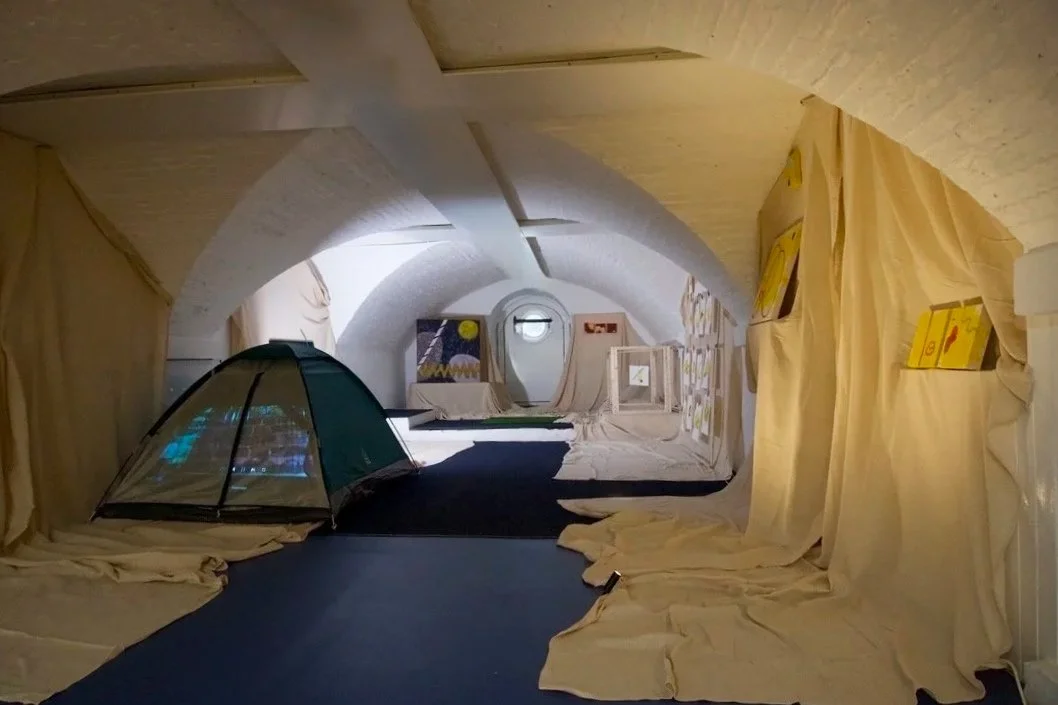
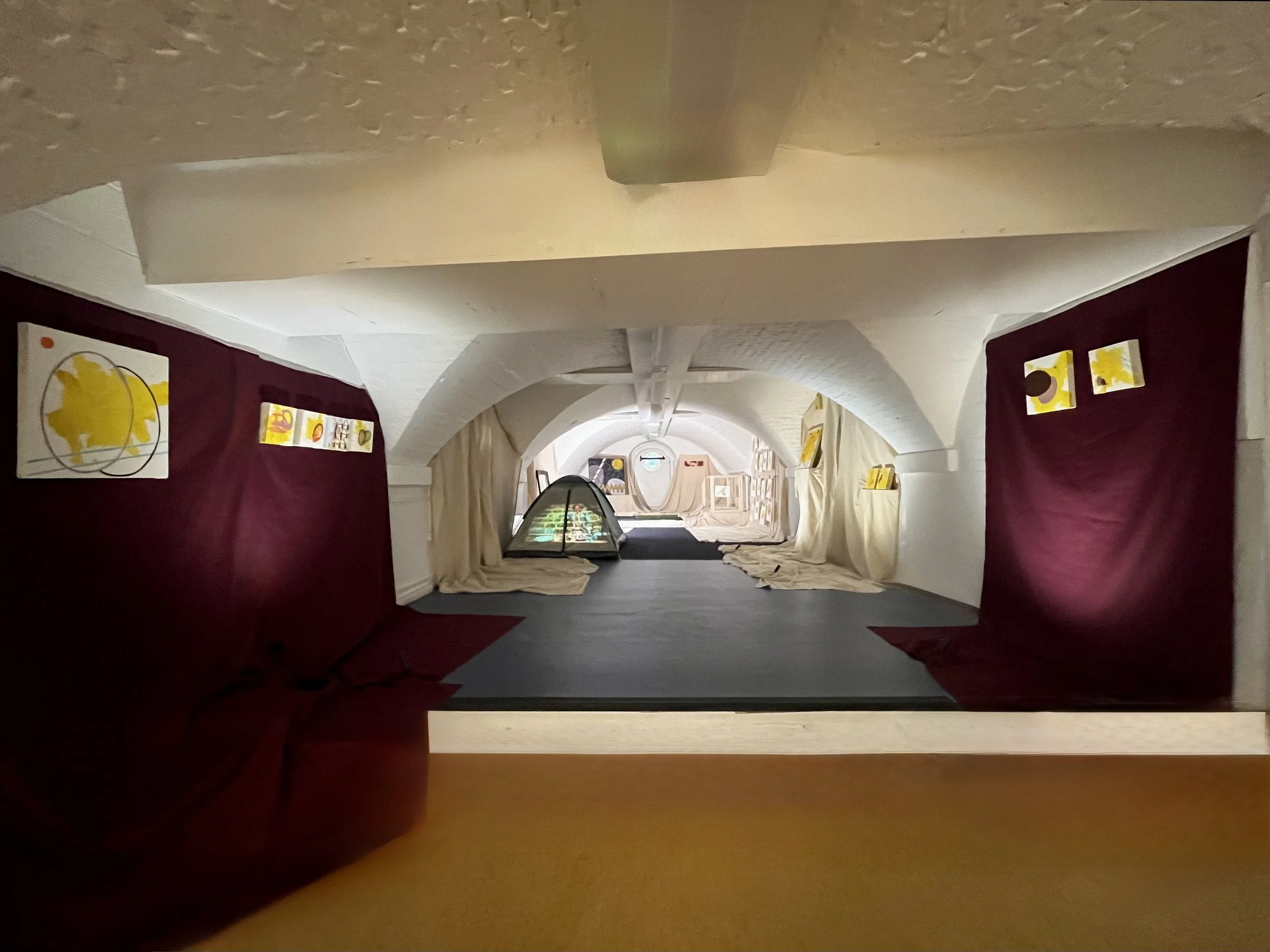
Wide installation view, REFUGE at the Crypt, two-person exhibition alongside Akiko Wanaka.